

Featured cover story for the June edition of Amigos805:
June 1, 2012

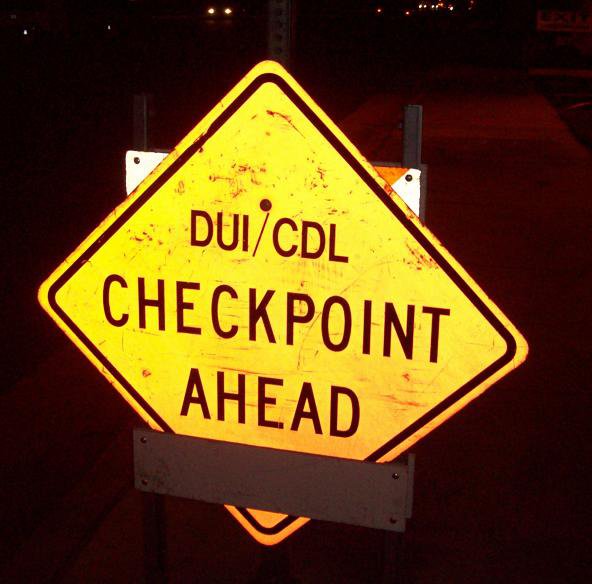
Members of the Oxnard Police Department recently conducted a traffic stop in the city looking for suspected drunk drivers and other motorists who may have violated various laws. Photo by Cesar Arredondo / Amigos805
Activists use the latest technologies to help undocumented immigrant motorists and hope 2013 could bring ‘license for all’
By Cesar Arredondo / Amigos805
Francisco Romero doesn’t like police checkpoints. He believes that towing companies and municipalities unfairly profit from undocumented immigrants caught there driving without a license.
So Romero would likes to hit them where he thinks it hurts: their pockets.
The Oxnard resident is a member of Todo Poder al Pueblo Collective, an activist group that uses Facebook, Tweeter and texting to warn immigrants about checkpoints before they happen — and avoid getting stopped, fined and their vehicles impounded. Collective members also turn out on location to help motorists avoid inspection points by law enforcement.
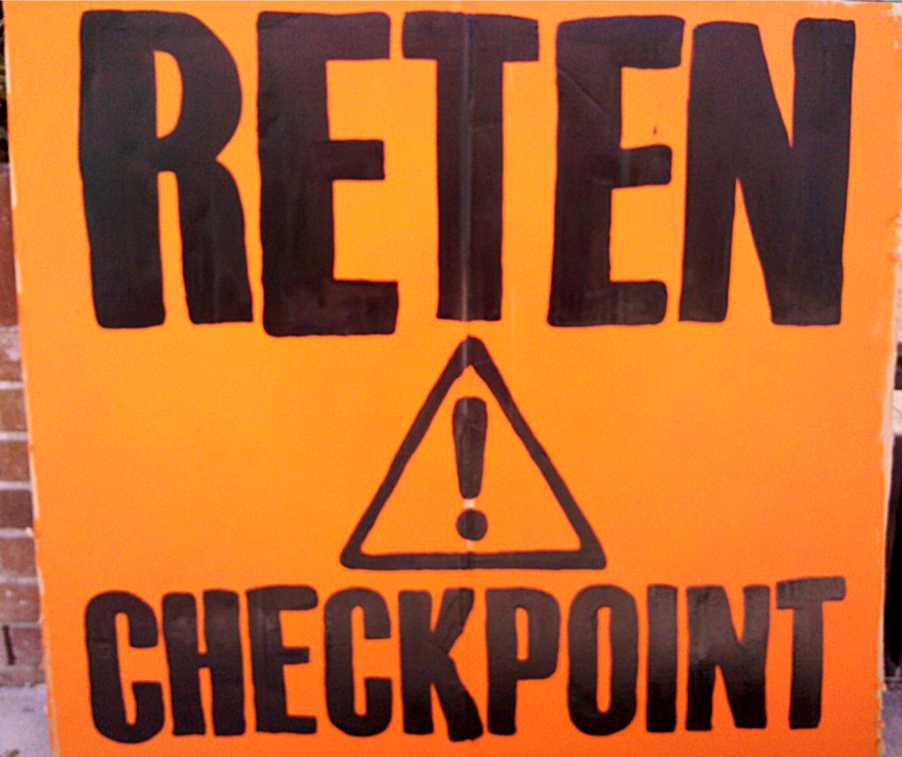
On a recent night, half a dozen collective members and supporters held huge signs in English and Spanish along Saviers Road to alert motorists about a checkpoint around the corner on Pleasant Valley Road in Oxnard.
“We probably turned away several hundreds vehicles,” Romero says proudly. “Some of the drivers were campesinas.”
IMPOUND FEES SURVEY
A Ventura County grand jury report on vehicle impound fees published last March found that most cities charge fees according to state vehicle code.
The collective doesn’t buy it and plans to press on with its preemptive checkpoint warning system.
Until last year unlicensed drivers faced a mandatory 30-day vehicle impound when caught and also faced other fees in accordance to state and local laws. Than meant fees of up to $1,500, often higher than the car’s worth. Many immigrants abandoned their cars instead of paying the charges while still facing court fines.
SOME RELIEF
A new state law, however, forbids automatic towing for getting caught driving without a license at checkpoints. AB 353 was authored by Assemblyman Gil Cedillo (D-Los Angeles) after news reports said that the corruption-plagued city of Bell used police inspection points to charge huge fees from undocumented immigrants. The law went into effect at the beginning of this year.
Now unlicensed drivers at checkpoints can have the vehicles’ registered owners or their authorized representatives pick up the cars by showing a driver’s license before the checkpoints close, according to Senior Office and Traffic Coordinator Jamie Brown of the Oxnard Police Department.
If that’s not possible, the cars will be towed away but can be pick up the following days — no longer a minimum of 30 days, says Brown. In Oxnard, this could mean having to pay the $241 police release fee, the $130 towing fee and the $30 daily storage fee — about $400 in total.
NOT ENOUGH PROGRESS
Todo Poder al Pueblo collective acknowledges that things have improved but insists that cities and towing companies are still raking in high fees and profiting from many undocumented immigrants, who usually work in low-paying jobs in agriculture and other sectors.
Oxnard has the highest vehicle release fee in the county. Thousand Oaks is second with $220, followed by Ventura with $200 and Port Hueneme with $160. The Sheriff’s Office’s charges an $11 fee in unincorporated areas, the lowest in the county.
Activists also question what the collected fees are used for.
But according to the grand jury’s report, in the case of Oxnard the $241 release fee covers the cost of checkpoint personnel and resources, including a police officer, a police department commander, a dispatcher, a records technician, a word processor and a black and white cruiser involved. Other cities use different formulas. The report does not break down the cost per item.
STATE GRANTS
On the other hand, the city also has received several grants from the California Office of Traffic Safety for drunk driving and collision prevention, including one to two checkpoint each month, says Senior Officer Brown.
For example, in November of 2010 the city got a grant of $305,000 for a whole year, according to a police department press release. The document did not specified how much money was allocated to checkpoints.
On the last checkpoints from 6 p.m. to 3 a.m. on May 25, more then 20 police officers and various other volunteers worked two locations, one at the intersection of Pleasant Valley at Saviers roads and the other on the corner of Oxnard Boulevard and Eight Street. They also involved several motorcycles, cruisers, trucks and other equipment.
EDUCATING THE COMMUNITY
Both the police and activists seem to agree that the number of impounded cars may be decreasing this year thanks to AB 353 based on anecdotal evidence, although neither provide figures.
In order to keep those numbers low, the community needs to be informed about their rights and responsibilities, according to some activists.
“A lot of undocumented immigrants are still driving but unaware of the new law,” says Miguel Rodriguez, a community organizer with the Central Coastal Alliance United for a Sustainable Economy, CAUSE. “They should learn about the new rules and carry on them a Mexican ID card, a phone number of someone who could pick up their cars at checkpoints and proof of car insurance. They also need to stay away from situations where they can be pulled over.”
“Vehicle impounds were a terrible situation in Ventura County,” says Alicia Flores, executive director of La Hermandad Hank Lacayo Youth and Family Center in Oxnard. “But things are changing. At our center we don’t get as many complaints as we used to.”
Most activists believe that the best solution would be a humane, comprehensive immigration reform, which has proven elusive under President Barack Obama’s term in office.
ONE MORE TRY
For now they are turning their attention to another
legislative effort in Sacramento to restore the driver’s license for undocumented immigrants, which was available for many years until it ended back in 1993.
Assemblyman Gil Cedillo says he will introduce again legislation in the next few months before the end of he’s termed out of office later this year.
There is a new sense of optimism among immigrants in California. The state passed the Dream Act that will allows undocumented students to get financial aid to attend college.
And some point to recent comments in favor of driver licenses for undocumented immigrants made by Los Angeles County Sheriff Lee Baca and Los Angeles Police Chief Charlie Beck.
“We are hopeful that 2013 will be the year,” says Elliott Gabriel, another member of Todo Poder al Pueblo Collective. “We need the entire community to get behind this issue and send a message that the time is now. We need the support of organized labor, faith groups, students, everyone in our communities.”
Adds Romero, the other collective member: “We’re going to be lobbying hard, meeting with the sheriff, police chiefs and the CHP in Ventura County. If we succeed, that would be the end of worries of cars being impounded at checkpoints. We’re going to say: Esto se acabó” — We’ve done it.

The group Todo Poder has been using Facebook, Twitter and text to warn motorists of potential checkpoints locations. The group’s website is: https://todopoderalpueblo.org/ Photo by Cesar Arredondo / Amigos805
***
Luchan contra retenes mientras persiguen un sueño
Activistas usan las últimas tecnologías para ayudar a los automovilistas indocumentados y esperan que 2013 brinde ‘licencia para todos’
Por Cesar Arredondo / Amigos805
A Francisco Romero no le gustan los retenes policiales. Cree que las compañías de grúas y las municipalidades se aprovechan injustamente de indocumentados sin licencias de conducir.
Así que Romero quiere castigarlos donde piensa que más les duele: sus bolsillos.
El residente de Oxnard es miembro del Colectivo Todo Poder al Pueblo, un grupo activista que usa Facebook, Tweeter y mensajes de texto telefónico para advertir a los inmigrantes sobre los retenes antes de que estos empiecen, de modo que eviten que los detengan, los multen y les consignen sus vehículos.
Los miembros del colectivo también salen a las calles para ayudar a los automovilistas a esquivar las paradas de inspección. En una noche reciente llegaron con enormes carteles en inglés y español a lo largo del Saviers Road para alertar acerca de un retén a la vuelta de la esquina en el Pleasant Valley Road en Oxnard.
“Probablemente desviamos varios cientos de vehículos”, dice orgullosamente Romero. “Algunas de las personas que manejaban eran campesinas”.
SONDEO REGIONAL
Un estudio del Gran Jurado del Condado de Ventura sobre cuotas de vehículos consignados, publicado en marzo pasado, concluyó que la mayoría de las ciudades de la región cobran cargos de acuerdo al código estatal de vehículos.
El colectivo no confía en los resultados y planea mantener su sistema preventivo contra los retenes.
Hasta el año pasado a los conductores sin licencia les confiscaban sus vehículos por un período obligatorio de 30 días al ser detenidos en los puntos de inspección y además enfrentaban otros cobros de acuerdo a las leyes estatales y locales. Eso significaba gastos de hasta $1,500, una cifra a menudo superior al valor del carro. Muchos inmigrantes abandonaban sus vehículos en lugar de pagar los cargos y aun enfrentaban multas de las cortes.
ALGO DE AYUDA
Una nueva legislación estatal, sin embargo, prohíbe el remolque automático de carros de choferes sin licencia en los retenes. La ley AB 353 fue presentada por el asambleísta Gil Cedillo (demócrata de Los Ángeles) tras enterarse que la infame ciudad de Bell utilizaba las paradas de revisión para cobrar altas multas a los inmigrantes indocumentados sin licencia. La ley entró en vigor a principios de este año.
Ahora los conductores sin licencia pueden pedir que los propietarios registrados de los carros o sus representantes autorizados recojan los vehículos mostrando una licencia de conducir antes de que cierren retenes, de acuerdo a Jamie Brown, coordinador de tráfico del Departamento de Policía de Oxnard.
De lo contrario, los coches serán remolcados lejos pero pueden recogerse los días inmediatos, ya sin un mínimo de 30 días, dice Brown. En Oxnard esto significa tener que pagar una cuota del permiso policial para devolver carros de $241, la tarifa de la grúa de $130 y la cuota de aparcamiento diario de $30—unos $400 en total.
INSUFICIENTE PROGRESO
El Colectivo Todo Poder al Pueblo reconoce que las cosas han mejorado, pero insiste en que los municipios y las compañías de grúas siguen cobrando tarifas altas y aprovechándose de muchos inmigrantes indocumentados, quienes por lo regular trabajan en empleos poco remunerados de la agricultura y otros sectores.
Oxnard tiene los permisos policiales más caros para devolver carros confiscados en todo el condado.
Thousand Oaks ocupa el segundo lugar con $220, seguido por Ventura con $200 dólares y Port Hueneme con $160. El Departamento del Sheriff cobra una cuota de $11 en las áreas no incorporadas, la más baja en el condado.
Los activistas también cuestionan el uso de los fondos recaudos con los permisos.
Pero según el informe del gran jurado, en el caso de Oxnard la cuota de $241 cubre el costo de personal y recursos de los retenes, incluido un oficial de policía, un comandante del departamento de policía, un distribuidor, un técnico de registros, un procesador de textos y una patrulla. Otras ciudades utilizan diferentes fórmulas. El informe no especifica el costo por cada renglón.
SUBVENCIONES ESTATALES
Por otro lado, la ciudad también recibe varios fondos de la Oficina para la Seguridad de Tráfico de California para programas de prevención de colisiones y del manejo en estado de ebriedad, que incluye uno o dos retenes al mes, dice Brown, el coordinador de tráfico.
Por ejemplo, en noviembre de 2010 la ciudad obtuvo 305 mil dólares en fondos para todo un año, de acuerdo con un comunicado de prensa de la policía. El documento no especificó cuánto dinero se destinó a los retenes.
En las últimas paradas de inspección del 25 de mayo, más luego 20 agentes de policía y varios otros voluntarios trabajaron dos localidades, una en la intersección de las calles Pleasant Valley y Saviers, y la otra en la esquina del bulevar Oxnard y la Calle Ocho. Ahí también se usaron varias motocicletas, autopatrullas, camiones y otros equipos.
EDUCACION DE LA COMUNIDAD
La policía y los activistas parecen coincidir en que la cantidad de automóviles confiscados está disminuyendo este año gracias a la ley AB 353 basándose en evidencia anecdótica, aunque no proporcionan cifras.
A fin de mantener los números bajos, algunos líderes hispanos dicen que la comunidad debe informarse de sus derechos y responsabilidades.
“Muchos inmigrantes indocumentados siguen manejando pero desconocen la nueva ley”, dice Miguel Rodríguez, un organizador comunitario de la Alianza Unida de la Costa Central para una Economía Sostenible, CAUSE por sus siglas en inglés. “Deben informarse de las nuevas reglas y siempre traer una matrícula consular, un número de teléfono de alguien que pueda recoger sus coches en los retenes y la prueba de seguro de auto. Además tiene que evitar situaciones que puedan resultar en su detención”.
“La confiscación de vehículo era una situación terrible en el Condado de Ventura”, dice Alicia Flores, directora ejecutiva de La Hermandad y Centro Juvenil y Familiar Hank Lacayo de Oxnard. “Pero las cosas están cambiando. En nuestro centro ya no recibimos tantas quejas como antes”.
La mayoría de los activistas cree que la mejor solución sería una reforma migratoria integral, la cual ha resultado elusiva bajo el mandato del Presidente Barack Obama.
OTRO INTENTO MÁS
Por ahora están enfocando su atención en otra iniciativa de ley en Sacramento que restauraría la licencia de conducir para inmigrantes indocumentados, la cual estuvo disponible por muchos años hasta que se eliminó en 1993.
El asambleísta Gil Cedillo, un demócrata de Los Ángeles, dice que nuevamente presentará su propuesta legislativa en los próximos meses antes de que concluya su último período de servicio en la legislatura a fines de este año. Hay un nuevo sentir optimista entre los inmigrantes en California. El estado aprobó la ley Dream que permite a los estudiantes indocumentados obtener ayuda financiera para asistir a la universidad.
Y algunas personas subrayan el respaldo a favor de las licencias para indocumentados que anunciaron recientemente el sheriff del Condado de Los Ángeles, Lee Baca, y el jefe de la policía de Los Ángeles, Charlie Beck.
“Tenemos esperanza de que 2013 será el año”, dice Elliott Gabriel, otro miembro del Colectivo de Todo Poder al Pueblo. “Necesitamos que toda la comunidad apoye esta campaña y que insista que ahora es el momento.
Necesitamos la cooperación de sindicatos, grupos religiosos, estudiantes, de todos en nuestras comunidades”.
Agrega Romero, el otro miembro del colectivo: “Vamos a estar presionando duro, reuniéndonos con el sheriff, los jefes de policía y la Patrulla de Caminos de California en el Condado de Ventura. Si lo logramos, sería el fin de las preocupaciones por perder vehículos en los retenes. Vamos a decir: Esto se acabó”.

Los agentes de la Policía de Oxnard recientemente instalaron un retén en la ciudad en busca de conductores ebrios o sin licencia. El Colectivo Todo Poder usa Facebook, Twitter y textos por teléfono para alertar a los conductores acerca de retenes policiales. Foto por Cesar Arredondo / Amigos805



 Colectivo Todo Poder al Pueblo