VENTURA COUNTY STAR – Authorities continue to investigate Oxnard police shooting


Excerpts:

  • Fatally shot were [Alfonso] Limon, whose sister said he was jogging in the area, and Jose Zepeda, 24, of Oxnard, who was one of the two who ran from police, officials said. The other person who ran, Justin Villa, 24, suffered injuries that were not life-threatening.

….“It is also important to note that our officers have been impacted by this incident, as well,” [Chief Jeri Williams] said. “We send our heart­felt concerns for those officers and their ­families.”
Elliott Gabriel, 28, is a member of Todo Poder al Pueblo Collective, a local group that has rallied this year against what it calls Oxnard police brutality. He said some neighbors saw police shoot ­Limon as he was trying to cooperate. He said people are traumatized and angered by the ­incident.
“The rage is palpable,” Gabriel said. “You can feel it; it is very ­heavy.”
The group plans to hold a rally at 5 p.m. Monday at Del Sol Park in La ­Colonia marking the National Day of Protest to demand that those involved in the shooting be brought to ­justice.
“If I seriously messed up in my job, I would get fired. In the case of Oxnard police, they go on paid administrative leave,” ­Gabriel said.
He accused Oxnard police of corruption and a ­cover-up.
“We feel it is something that is deeply ingrained in the department,” ­Gabriel said. “It didn’t start with Jeri ­Williams and it will not end with ­Jeri ­Williams.”
Gabriel and some other members of the collective took their cause to Tuesday night’s Oxnard City ­Council ­meeting.
During the public comment period of the meeting, Gabriel drew applause from some attendees and a terse warning from Mayor Tom Holden during a strongly worded three-minute statement. The statement included references to one man being “torn apart in a hail of gunfire,” the dead men having encountered the “wrong set of sadistic cops” and police being in the pocket of the city’s elite “like a set of keys.”
Holden, who generally officiates calmly, sounded tense when he warned the audience, as Gabriel spoke, that they’d have to leave if they applauded again. Council rules don’t allow applause during the ­meetings.
Members of the collective have been attending some council meetings over the summer to protest the June death of Robert ­Ramirez. The 26-year-old died in June after a brief struggle with police while he was apparently over­dosing on meth­amphetamine.
Ramirez’s parents were among those in the audience at the ­council ­meeting.
Others at the meeting spoke in support of the ­police.
The Rev. Edgar Mohorko, president of the Oxnard non­profit the National Police Clergy Council, read a statement from his organization in favor of Williams and said the group hoped it could help “defuse tensions” on the street.

Click here to read more

VCReporter – A victim of police brutality speaks

By Ventura County resident 10/11/2012

Re: Police brutality and the facts, editorial, 9/6

Although I agree that facts, and not emotion, must be the driving force of rallies, demonstrations and calls for change in our local police departments, I amicably differ with you on how the facts stand. And I certainly differ on the need for a disciplined, regulated police. I am a law-abiding citizen and victim of crime who was nearly shot by a police officer who erred in thinking I was breaking into the residence I live in. Luckily, I am alive today to write about it…

Click here to read more

HispanTV: Comunidad de Oxnard enfrenta a la policía local

La comunidad de Oxnard, una ciudad agrícola en el centro de California, enfrenta a la policía local demandando la detención del problema creciente de brutalidad policial.

Astrid Solórzano nos amplía la noticia.

**Nota**: El video por HispanTV usa la palabra “pandillero” en su descripción del joven Robert Ramirez. Es importante aclarar que Robert NO ERA pandillero y que ese comentario estuvo de más. La preferencia de CTPaP es que ese comentario sea omitido en la edición.

http://www.hispantv.com

Robert Ramirez News Roundup

CBS LA 2 – Oxnard Family Wants Answers In Death Of Son In Police Custody

VENTURA COUNTY STAR – Family claims Oxnard police beat man before he died

Attorney Ron Bamieh (left) stands besides family members of Robert Ramirez during a news conference Thursday in Ventura. Ramirez died after a struggle with Oxnard police last month.<br /><br /><br />

Attorney Ron Bamieh (left) stands besides family members of Robert Ramirez during a news conference Thursday in Ventura. Ramirez died after a struggle with Oxnard police last month.


EXCERPTS:


  • Relatives of a 26-year-old Oxnard man who died after a police struggle last month are claiming he was beaten by officers and are demanding an independent investigation.
    Robert Ramirez’s family became concerned after viewing his body and hired attorney Ron Bamieh. The family and Bamieh held a news conference Thursday on the issue.
    Ramirez died June 23 after police responded to a report of a man suffering from a possible drug overdose in the 1100 block of South L Street in Oxnard.
  • The incident is being investigated by the Oxnard police homicide unit and Ventura County District Attorney’s Office, which is standard procedure. The seven officers involved were placed on administrative leave but returned to work June 27, said Monica Munoz, Oxnard police spokeswoman.
  • During the news conference, Ramirez’s mother, Teresa, said her son was loved by his family. While he struggled with drugs and was once in prison, the family is trying to find out what led to his death.
    “It is easy to discount the lives of those who have issues like Robert did,” she said while sitting alongside her daughter, son, niece and grandson. “However, we … will not be silent and diminish the life of our son by excusing inappropriate behavior that may have caused or led to his death.”
    She said she hopes the officers involved in the incident will speak up about what happened that night.
    “I would hope that those involved in Robert’s death would have the courage to speak the truth about their actions and the actions of their fellow officers,” she said.
    Private investigators working for Bamieh examined evidence and reviewed video and audio from witnesses, the attorney said. They found Ramirez had bruises all over his body at the time of his death, Bamieh said.
  • Bamieh said the FBI is investigating the case.
    “The FBI is aware of the allegations and is reviewing the matter to determine if a federal investigation is warranted,” Ari DeKofsky, a spokeswoman in the FBI’s Los Angeles office, said Thursday.

Read more at VCStar

Undated photo of Robert Ramirez who died last month during a struggle with police. Ramirez is with his mother Teresa Ramirez.<br /><br /><br />

COURTESY PHOTO

Undated photo of Robert Ramirez who died last month during a struggle with police. Ramirez is with his mother Teresa Ramirez.

Our community demands justice — an independent investigation of the murder of Ramirez, and the punishment of those guilty of this crime!

Stop the militarization of our communities —  killer cops, off our streets!
VIGIL: Saturday, August 4, 6pm, Plaza Park

Bilingual report: Fighting police checkpoints while pressing for a dream

Featured cover story for the June edition of Amigos805: 

June 1, 2012

Members of the Oxnard Police Department recently conducted a traffic stop in the city looking for suspected drunk drivers and other motorists who may have violated various laws. Photo by Cesar Arredondo / Amigos805

Activists use the latest technologies to help undocumented immigrant motorists and hope 2013 could bring ‘license for all’

By Cesar Arredondo / Amigos805

Francisco Romero doesn’t like police checkpoints. He believes that towing companies and municipalities unfairly profit from undocumented immigrants caught there driving without a license.

So Romero would likes to hit them where he thinks it hurts: their pockets.

The Oxnard resident is a member of Todo Poder al Pueblo Collective, an activist group that uses Facebook, Tweeter and texting to warn immigrants about checkpoints before they happen — and avoid getting stopped, fined and their vehicles impounded. Collective members also turn out on location to help motorists avoid inspection points by law enforcement.

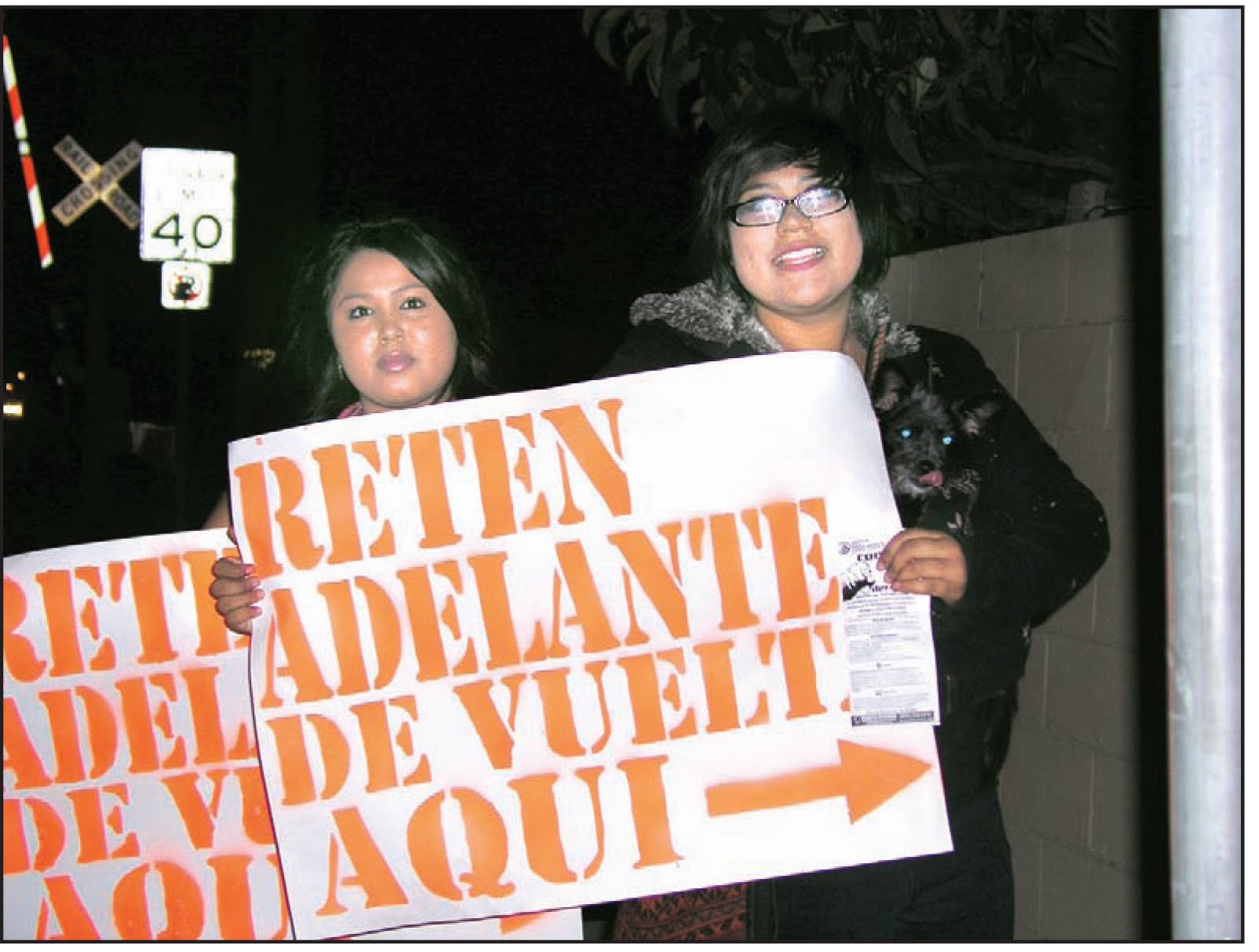
On a recent night, half a dozen collective members and supporters held huge signs in English and Spanish along Saviers Road to alert motorists about a checkpoint around the corner on Pleasant Valley Road in Oxnard.

“We probably turned away several hundreds vehicles,” Romero says proudly. “Some of the drivers were campesinas.”

 IMPOUND FEES SURVEY

A Ventura County grand jury report on vehicle impound fees published last March found that most cities charge fees according to state vehicle code.

The collective doesn’t buy it and plans to press on with its preemptive checkpoint warning system.

Until last year unlicensed drivers faced a mandatory 30-day vehicle impound when caught and also faced other fees in accordance to state and local laws. Than meant fees of up to $1,500, often higher than the car’s worth. Many immigrants abandoned their cars instead of paying the charges while still facing court fines.

SOME RELIEF

A new state law, however, forbids automatic towing for getting caught driving without a license at checkpoints. AB 353 was authored by Assemblyman Gil Cedillo (D-Los Angeles) after news reports said that the corruption-plagued city of Bell used police inspection points to charge huge fees from undocumented immigrants. The law went into effect at the beginning of this year.

Now unlicensed drivers at checkpoints can have the vehicles’ registered owners or their authorized representa­tives pick up the cars by showing a driver’s license before the checkpoints close, according to Senior Office and Traffic Coordinator Jamie Brown of the Oxnard Police Department.

If that’s not possible, the cars will be towed away but can be pick up the following days — no longer a minimum of 30 days, says Brown. In Oxnard, this could mean having to pay the $241 police release fee, the $130 towing fee and the $30 daily storage fee — about $400 in total.

NOT ENOUGH PROGRESS

Todo Poder al Pueblo collective acknowledges that things have improved but insists that cities and towing companies are still raking in high fees and profiting from many undocumented immigrants, who usually work in low-paying jobs in agriculture and other sectors.

Oxnard has the highest vehicle release fee in the county. Thousand Oaks is second with $220, followed by Ventura with $200 and Port Hueneme with $160. The Sheriff’s Office’s charges an $11 fee in unincorporated areas, the lowest in the county.

Activists also question what the collected fees are used for.

But according to the grand jury’s report, in the case of Oxnard the $241 release fee covers the cost of checkpoint personnel and resources, including a police officer, a police department commander, a dispatcher, a records technician, a word processor and a black and white cruiser involved. Other cities use different formulas. The report does not break down the cost per item.

STATE GRANTS

On the other hand, the city also has received several grants from the California Office of Traffic Safety for drunk driving and collision prevention, including one to two checkpoint each month, says Senior Officer Brown.

For example, in November of 2010 the city got a grant of $305,000 for a whole year, according to a police depart­ment press release. The document did not specified how much money was allocated to checkpoints.

On the last checkpoints from 6 p.m. to 3 a.m. on May 25, more then 20 police officers and various other volunteers worked two locations, one at the intersection of Pleas­ant Valley at Saviers roads and the other on the corner of Oxnard Boulevard and Eight Street. They also involved several motorcycles, cruisers, trucks and other equipment.

EDUCATING THE COMMUNITY

Both the police and activists seem to agree that the num­ber of impounded cars may be decreasing this year thanks to AB 353 based on anecdotal evidence, although neither provide figures.

In order to keep those numbers low, the community needs to be informed about their rights and responsibilities, according to some activists.

“A lot of undocumented immigrants are still driving but unaware of the new law,” says Miguel Rodriguez, a community organizer with the Central Coastal Alliance United for a Sustainable Economy, CAUSE. “They should learn about the new rules and carry on them a Mexican ID card, a phone number of someone who could pick up their cars at checkpoints and proof of car insurance. They also need to stay away from situations where they can be pulled over.”

“Vehicle impounds were a terrible situation in Ventura County,” says Alicia Flores, executive director of La Her­mandad Hank Lacayo Youth and Family Center in Oxnard. “But things are changing. At our center we don’t get as many complaints as we used to.”

Most activists believe that the best solution would be a humane, comprehensive immigration reform, which has proven elusive under President Barack Obama’s term in office.

ONE MORE TRY

For now they are turning their attention to another

legislative effort in Sacramento to restore the driver’s license for undocumented immigrants, which was available for many years until it ended back in 1993.

Assemblyman Gil Cedillo says he will introduce again legislation in the next few months before the end of he’s termed out of office later this year.

There is a new sense of optimism among immigrants in California. The state passed the Dream Act that will allows undocumented students to get financial aid to attend college.

And some point to recent comments in favor of driver licenses for undocumented immigrants made by Los Angeles County Sheriff Lee Baca and Los Angeles Police Chief Charlie Beck.

“We are hopeful that 2013 will be the year,” says Elliott Gabriel, another member of Todo Poder al Pueblo Col­lective. “We need the entire community to get behind this issue and send a message that the time is now. We need the support of organized labor, faith groups, students, everyone in our communities.”

Adds Romero, the other collective member: “We’re going to be lobbying hard, meeting with the sheriff, police chiefs and the CHP in Ventura County. If we succeed, that would be the end of worries of cars being impounded at checkpoints. We’re going to say: Esto se acabó” — We’ve done it.

The group Todo Poder has been using Facebook, Twitter and text to warn motorists of potential checkpoints locations. The group’s website is: https://todopoderalpueblo.org/ Photo by Cesar Arredondo / Amigos805

***

Luchan contra retenes mientras persiguen un sueño

Activistas usan las últimas tecnologías para ayudar a los automovilistas indocumentados y esperan que 2013 brinde ‘licencia para todos’

Por Cesar Arredondo / Amigos805

A Francisco Romero no le gustan los retenes policiales. Cree que las compañías de grúas y las municipalidades se aprovechan injustamente de indocumentados sin licencias de conducir.

Así que Romero quiere castigarlos donde piensa que más les duele: sus bolsillos.

El residente de Oxnard es miembro del Colectivo Todo Poder al Pueblo, un grupo activista que usa Facebook, Tweeter y mensajes de texto telefónico para advertir a los inmigrantes sobre los retenes antes de que estos empiecen, de modo que eviten que los detengan, los multen y les consignen sus vehículos.

Los miembros del colectivo también salen a las calles para ayudar a los automovilistas a esquivar las paradas de inspección. En una noche reciente llegaron con enormes carteles en inglés y español a lo largo del Saviers Road para alertar acerca de un retén a la vuelta de la esquina en el Pleasant Valley Road en Oxnard.

“Probablemente desviamos varios cientos de vehículos”, dice orgullosamente Romero. “Algunas de las personas que manejaban eran campesinas”.

SONDEO REGIONAL

Un estudio del Gran Jurado del Condado de Ventura sobre cuotas de vehículos consignados, publicado en marzo pasado, concluyó que la mayoría de las ciudades de la región cobran cargos de acuerdo al código estatal de vehículos.

El colectivo no confía en los resultados y planea mantener su sistema preventivo contra los retenes.

Hasta el año pasado a los conductores sin licencia les confiscaban sus vehículos por un período obligatorio de 30 días al ser detenidos en los puntos de inspección y además enfrentaban otros cobros de acuerdo a las leyes estatales y locales. Eso significaba gastos de hasta $1,500, una cifra a menudo superior al valor del carro. Muchos inmigrantes abandonaban sus vehículos en lugar de pagar los cargos y aun enfrentaban multas de las cortes.

ALGO DE AYUDA

Una nueva legislación estatal, sin embargo, prohíbe el remolque automático de carros de choferes sin licencia en los retenes. La ley AB 353 fue presentada por el asambleísta Gil Cedillo (demócrata de Los Ángeles) tras enterarse que la infame ciudad de Bell utilizaba las paradas de revisión para cobrar altas multas a los inmigrantes indocumentados sin licencia. La ley entró en vigor a principios de este año.

Ahora los conductores sin licencia pueden pedir que los propietarios registrados de los carros o sus representantes autorizados recojan los vehículos mostrando una licencia de conducir antes de que cierren retenes, de acuerdo a Jamie Brown, coordinador de tráfico del Departamento de Policía de Oxnard.

De lo contrario, los coches serán remolcados lejos pero pueden recogerse los días inmediatos, ya sin un mínimo de 30 días, dice Brown. En Oxnard esto significa tener que pagar una cuota del permiso policial para devolver carros de $241, la tarifa de la grúa de $130 y la cuota de aparcamiento diario de $30—unos $400 en total.

INSUFICIENTE PROGRESO

El Colectivo Todo Poder al Pueblo reconoce que las cosas han mejorado, pero insiste en que los municipios y las compañías de grúas siguen cobrando tarifas altas y aprovechándose de muchos inmigrantes indocumentados, quienes por lo regular trabajan en empleos poco remunerados de la agricultura y otros sectores.

Oxnard tiene los permisos policiales más caros para devolver carros confiscados en todo el condado.

Thousand Oaks ocupa el segundo lugar con $220, seguido por Ventura con $200 dólares y Port Hueneme con $160. El Departamento del Sheriff cobra una cuota de $11 en las áreas no incorporadas, la más baja en el condado.

Los activistas también cuestionan el uso de los fondos recaudos con los permisos.

Pero según el informe del gran jurado, en el caso de Oxnard la cuota de $241 cubre el costo de personal y recursos de los retenes, incluido un oficial de policía, un comandante del departamento de policía, un distribuidor, un técnico de registros, un procesador de textos y una patrulla. Otras ciudades utilizan diferentes fórmulas. El informe no especifica el costo por cada renglón.

SUBVENCIONES ESTATALES

Por otro lado, la ciudad también recibe varios fondos de la Oficina para la Seguridad de Tráfico de California para programas de prevención de colisiones y del manejo en estado de ebriedad, que incluye uno o dos retenes al mes, dice Brown, el coordinador de tráfico.

Por ejemplo, en noviembre de 2010 la ciudad obtuvo 305 mil dólares en fondos para todo un año, de acuerdo con un comunicado de prensa de la policía. El documento no especificó cuánto dinero se destinó a los retenes.

En las últimas paradas de inspección del 25 de mayo, más luego 20 agentes de policía y varios otros voluntarios trabajaron dos localidades, una en la intersección de las calles Pleasant Valley y Saviers, y la otra en la esquina del bulevar Oxnard y la Calle Ocho. Ahí también se usaron varias motocicletas, autopatrullas, camiones y otros equipos.

EDUCACION DE LA COMUNIDAD

La policía y los activistas parecen coincidir en que la cantidad de automóviles confiscados está disminuyendo este año gracias a la ley AB 353 basándose en evidencia anecdótica, aunque no proporcionan cifras.

A fin de mantener los números bajos, algunos líderes hispanos dicen que la comunidad debe informarse de sus derechos y responsabilidades.

“Muchos inmigrantes indocumentados siguen manejando pero desconocen la nueva ley”, dice Miguel Rodríguez, un organizador comunitario de la Alianza Unida de la Costa Central para una Economía Sostenible, CAUSE por sus siglas en inglés. “Deben informarse de las nuevas reglas y siempre traer una matrícula consular, un número de teléfono de alguien que pueda recoger sus coches en los retenes y la prueba de seguro de auto. Además tiene que evitar situaciones que puedan resultar en su detención”.

“La confiscación de vehículo era una situación terrible en el Condado de Ventura”, dice Alicia Flores, directora ejecutiva de La Hermandad y Centro Juvenil y Familiar Hank Lacayo de Oxnard. “Pero las cosas están cambiando. En nuestro centro ya no recibimos tantas quejas como antes”.

La mayoría de los activistas cree que la mejor solución sería una reforma migratoria integral, la cual ha resultado elusiva bajo el mandato del Presidente Barack Obama.

OTRO INTENTO MÁS

Por ahora están enfocando su atención en otra iniciativa de ley en Sacramento que restauraría la licencia de conducir para inmigrantes indocumentados, la cual estuvo disponible por muchos años hasta que se eliminó en 1993.

El asambleísta Gil Cedillo, un demócrata de Los Ángeles, dice que nuevamente presentará su propuesta legislativa en los próximos meses antes de que concluya su último período de servicio en la legislatura a fines de este año. Hay un nuevo sentir optimista entre los inmigrantes en California. El estado aprobó la ley Dream que permite a los estudiantes indocumentados obtener ayuda financiera para asistir a la universidad.

Y algunas personas subrayan el respaldo a favor de las licencias para indocumentados que anunciaron recientemente el sheriff del Condado de Los Ángeles, Lee Baca, y el jefe de la policía de Los Ángeles, Charlie Beck.

“Tenemos esperanza de que 2013 será el año”, dice Elliott Gabriel, otro miembro del Colectivo de Todo Poder al Pueblo. “Necesitamos que toda la comunidad apoye esta campaña y que insista que ahora es el momento.

Necesitamos la cooperación de sindicatos, grupos religiosos, estudiantes, de todos en nuestras comunidades”.

Agrega Romero, el otro miembro del colectivo: “Vamos a estar presionando duro, reuniéndonos con el sheriff, los jefes de policía y la Patrulla de Caminos de California en el Condado de Ventura. Si lo logramos, sería el fin de las preocupaciones por perder vehículos en los retenes. Vamos a decir: Esto se acabó”.

Los agentes de la Policía de Oxnard recientemente instalaron un retén en la ciudad en busca de conductores ebrios o sin licencia. El Colectivo Todo Poder usa Facebook, Twitter y textos por teléfono para alertar a los conductores acerca de retenes policiales. Foto por Cesar Arredondo / Amigos805

LA OPINION – Ven posibilidad para licencias de conducir

Ven posibilidad para licencias de conducir

Consideran que indocumentados pueden tener una oportunidad real

POR: Lucero Amador-Miranda / lucero.amador@laopinion.com |   03/31/2012  |  La Opinión

Los esfuerzos para lograr que los indocumentados obtengan una licencia de conducir se fortalecen. Algunos líderes aseguran que hay posibilidad de ganar esa batalla.

“Estamos cerca de lograrlo, creemos que en estos momentos tenemos las condiciones”, explicó Ron Goches, uno de los dirigentes de la Coalición de Inmigrantes del Sur de California (SCIC). “Aunque el gobernador [Jerry Brown] ha dicho que no firmará, tenemos que movilizarnos para convencerlo”.

Dirigentes que integran la SCIC se reunieron ayer para diseñar una campaña estatal convincente, dicen, no sólo enfocada a los políticos sino también a todos los habitantes de California.

Este plan podría dar inicio en dos meses.

Otra de las buenas condiciones que menciona el activista es el reciente apoyo de varios jefes policiacos de las ciudades más importantes, como Los Ángeles, para que se otorgue licencias de conducir a los indocumentados.

El senador Gil Cedillo, creador de la propuesta de ley -desde 2001- para que se otorgue licencias a los indocumentados, asistió a esta reunión para dar un pronóstico de las posibilidad políticas de volver a impulsar esta iniciativa.

“Hoy tenemos un nuevo liderazgo político, nuevos líderes en la comunidad”, expresó Cedillo. “El gobernador [Brown] ha firmado las actas del Dream Act para los estudiantes indocumentados, y la AB 353 sobre el decomiso de autos a indocumentados en los retenes, creo que existe la oportunidad de que firme la ley de las licencias”.

Cedillo habló a los asistentes sobre las condiciones económicas del estado, por lo que el ingreso de miles de dólares con el trámite de las licencias, sería un beneficio nada despreciable.

Pero destacó que independientemente de los beneficios que esto pueda resultar para las arcas estatales, es la realización de un movimiento comunitario.

“Sé que es difícil para ustedes hacer movilizaciones a Sacramento, pero lo tienen qué hacer”, expresó el senador.

Durante más de una década el tema de las licencias para indocumentados ha tenido sus altas y bajas. Y muchas veces, de estar a un paso de su aprobación, la propuesta de ley no ve la luz.

Andres Contreras y su esposa hablan con La Opinión acerca del día en el que les decomisaron su auto por no tener licencia de conducir.
Foto: Aurelia Ventura / La Opinión

CONTEXTO

Sin embargo, Cedillo dijo que ahora el panorama político y social es otro.

“Estamos cerca de una nueva oportunidad real, que no existía con [el gobernador Arnold] Schwarzenegger”, explicó. “Fue una persona que no tuvo palabra, que no fue sincero, fue mentiroso, es la verdad”.

Francisco Romero, dirigente del Colectivo Todo Poder al Pueblo, basado en Oxnard, explicó que otra de las estrategias a considerar es la información.

“Necesitamos bombardear con información, porque es muy importante que la gente sepa de los beneficios de que todos los conductores tengan una licencia”, expresó.

Goches añadió que la comunidad californiana debe comprender la importancia de la ley, por seguridad de todos.

“De aprobarse la ley, los solicitantes tendrán que hacer un examen, deberán tener seguro de auto y eso nos dará mayor seguridad”, expuso el activista. “Aquí la lucha es con un grupo [de políticos] que por razones raciales se niegan a esta posibilidad”.

Durante una jornada de más de cinco horas, los dirigentes también hablaron de los resultado que ha tenido la campaña en contra de los decomisos de autos.

“Ha sido de mucho beneficio y con el uso de las redes sociales se han facilitado las alertas de los puntos de revisión de la policía”, explicó Romero.

Estos son los sitios que usted puede consultar para las alertas sobre los puntos de revisión de la policía:

Tel. (805) 3-AVISO-3

poder805@riseup.net

facebook.com/todopoder805

todopoderalpueblo.org

VC STAR: “Curbs on road checkpoints lift illegal immigrants’ fears”

Originally published by the Ventura County Star

From staff and wire reports

Posted December 26, 2011 at 1:28 a.m.

Article Excerpts:

  • … He does not have a driver’s license because he is in the United States illegally, and it would cost about $1,400 to get his Nissan Frontier pickup back from the towing company. He has breathed a little easier since he began getting blast text messages two years ago from activists who scour streets to find checkpoints as they are ­being set up.
    The cat-and-mouse game ends Sunday when a new law takes effect in California to prohibit police from impounding cars at sobriety checkpoints if a motorist’s only offense is being an unlicensed driver. Thousands of cars are towed each year in the state under those circumstances, hitting pocketbooks of illegal immigrants especially hard.
  • “A car is a necessity. It’s not a luxury,” said Aldama, 32, who lives in Escondido with his wife, who is a legal resident, and their 5-year-old son, a U.S. citizen.
    Assemblyman Gil Cedillo, a Los Angeles Democrat who tried unsuccessfully to restore driver licenses to illegal immigrants after California revoked the privilege in 1993, said he introduced the bill to ban towing after learning the notoriously corrupt city of Bell raked in big fees from unlicensed drivers at checkpoints.
    The National Highway Traffic Safety Administration paid for 2,553 checkpoints last year, which authorities say helps explain why deaths caused by drunken drivers hit an all-time low in the state.
    Police also ask for drivers’ licenses at the sobriety checkpoints. Supporters of the vehicle impounds say unlicensed drivers are also a roadside hazard and that the new law is misguided.
  • A sharp increase in federally funded sobriety checkpoints in California has fueled controversy.In July, protesters opposing the impounding of cars turned out at a police checkpoint in Oxnard.At the time, Francisco Romero, a member of Todo Poder al Pueblo Collective, said, “These are low-­income workers who need a vehicle to get back and forth to work.”In a news release at the time, the group stated:“Since 2009, we have seen a sharp increase in DUI checkpoints that have become less about checking for drunken drivers and more about the impounding of vehicles of unlicensed drivers.” [read more here]The protesters gathered with the intention of warning drivers about the checkpoint so they could take a side street and avoid officers. Police at the time said the checkpoints were designed primarily to target drunken drivers.

    read more…


Vida Newspaper: Protest against sobriety and driver’s license checkpoint

[since we reject that these are “sobriety checkpoints” which are meant to effectively stop and detain drunk drivers we would like to note that we were not protesting “sobriety” anything!]

[VIDA Newspaper 07/14/11 Oxnard, CA] Protestors were on hand to warn drivers about a sobriety and driver’s license checkpoint on Saturday night when Oxnard police officers screened drivers at the intersection of Channel Islands Boulevard and Dallas Drive, the eastbound lane approaching Rose Avenue

Passing drivers honked in approval and appreciation as members of Todo Poder al Pueblo Collective, lined up on the south side of Channel Islands near Albany Drive, waved cardboard signs warning them of the checkpoint ahead.

“We’re getting lots of thumbs-ups from people saying ‘thank you for doing that,’” said Francisco Romero of Todo Poder.

“It’s a total denial of basic human rights, which is why we’re getting such sympathy from throughout the neighborhood,” Elliot Gabriel, another Todo Poder member, who says this protest was just “the first one of many.”

Romero and Gabriel say police officers are unfairly using DUI checkpoints to seize cars from undocumented immigrants who are also unlicensed drivers. They say drunk driving checkpoints should be used to catch drunk drivers, not licensing violations by undocumented residents.

“They can’t get their vehicle out the next day,” explained Romero, adding that impound fees can range from $30 to $50 a day. “They can’t afford that, so they leave the vehicle and go get another for $300.”

Gabriel said the group is part of a broad coalition of civil rights and immigrant rights activists and lawyers who attended a recent workshop on Assembly Bill 1389, a bill that would change the rules for impounding vehicles. Under current law, police can impound a car or truck for 30 days if a motorist is caught driving without a valid license.

The bill, which is being sponsored in the State Senate by Gil Cedillo (D – Los Angeles) would separate sobriety checkpoints from vehicle inspection checkpoints, making it clearer when cars and trucks may be impounded. The bill passed the Assembly 54-22 on May 27, and now is waiting for approval by the State Senate Public Safety Committee before it goes to the senate floor.

The bill is being opposed by Mothers Against Drunk Driving, the California State Sheriff’s Assn. and other California law enforcement groups.

Oxnard police has expressed concerns about the issue and the perception the community has towards checkpoints and informed they are doing everything in their power not to impound vehicles from people while they continue enforcing the law. Under current law, unlicensed drivers are given time to call someone with a valid driver’s license to drive the car away.

The Channel Islands sobriety checkpoint was one of two held by Oxnard police from 6 p.m. to midnight on Saturday. Another was held in the northbound lanes of Ventura Road at Devonshire Drive.

None of the 828 drivers screened were arrested for drunken driving— but 31 drivers were given tickets for driving license violations. Fourteen of those were for driving without a license and one for driving with a suspended license.

Oxnard Police did not elaborate on what the other 16 tickets were for, but five vehicles were towed and a 46-year-old man was arrested for having drug paraphernalia.

PERIODICO VIDA: PROTESTA EN CONTRA DE RETENES


PROTESTA EN CONTRA DE RETENES
ALERTANA LOS MOTORISTAS: Durante un reten policiaco.

[PERIODICO VIDA 07/14/11 OXNARD, CA] Un grupo de protestantes se hizo presente la noche del sábado pasado para advertir a los conductors sobre un retén que la policía de Oxnard había instalado para identificar a conductores que manejan bajo los efectos del alcohol y aquellos quienes conducen sin licencia.

El retén estaba ubicado en la intersección de Channel Islands Boulevard y Dallas Drive, en el carril con dirección al este hacia Rose Avenue. Conductores que pasaban por el área pitaban a los protestantes como un símbolo de su apoyo y agradecimiento. Los protestantes, los cuales son miembros de Todo Poder al Pueblo, se encontraban en el lado sur de Channel Islands Blvd., cerca de Albany Drive, y mostraban cartels que advertían a los conductors sobre el retén que se encontraba más adelante.

“Estamos recibiendo muchas señales de aprobación de parte de la gente, diciéndonos ‘gracias por hacer eso'”, dijo Francisco Romero, miembro de Todo Poder.

“Es una negación de los derechos humanos básicos, es por eso que estamos recibiendo apoyo de nuestra comunidad”, dijo Elliot Gabriel, otro de los miembros de Todo Poder, quien agregó que la protesta del sábado fue sólo la “primera de muchas” que están por venir.

Romero y Gabriel comentaron que los oficiales de la policía utilizan los retenes anti conductores ebrios para confiscar los vehículos de inmigrantes indocumentados que no tienen licencia de manejar. Ellos dicen que los retenes anti conductores ebrios deben ser utilizados solamente para identificar a quienes manejan bajo los efectos del alcohol y no para otorgar infracciones y multas a los residentes indocumentados.

“Ellos no pueden sacar su vehículo al día siguiente”, explicó Romero, añadiendo que el costo para sacar un vehículo incautado es de entre $30 a $50 dólares al día.”Ellos no pueden asumir tal costo, así que dejan el vehículo ahí y compran otro por $300″.

Gabriel dijo que Todo Poder al Pueblo es parte de una coalición más grande de activistas en pro de los derechos humanos y los derechos de inmigrantes, y abogados que recientemente asistieron a un seminario sobre el Proyecto de Ley 1389 de la Asamblea, el cual cambiaría las reglas para confiscar los vehículos. Bajo la ley actual, la policía puede confiscar un carro o una camioneta por 30 días si el conductor no tiene una licencia de conducir valida.

El proyecto de ley, patrocinado en el Senado del Estado por Gil Cedillo (D-Los Angeles), separaría a los retenes anti conductores ebrios de los retenes de inspección de vehículos, haciendo más claro cuando es que los carros y camionetas podrían ser confiscados. El pasado 27 de mayo, el proyecto de ley fue aprobado por la Asamblea por una votación de 54 contra 22 y ahora esta en espera de ser aprobado por el Comité de Seguridad Pública del Senado Estatal antes de ser enviado al Senado.

Entre quienes se oponen al proyecto de ley se encuentra el grupo Mothers Against Drunk Driving, la Asociación de Alguaciles del Estado de California, entre otros grupos.

La policía de Oxnard ha expresado preocupación sobre el tema y sobre la percepción que la comunidad tiene sobre los retenes, y ha informado que los oficiales harán todo lo posible para evitar confiscar vehículos y seguir enforzando las leyes. Actualmente bajo la ley, las autoridades policíacas le dan la opción a los conductores sin licencia de manejar de llamar a alguien que tenga una licencia valida para venir a recoger el vehículo antes de que sea confiscado.

El retén en Channel Islands Blvd. fue uno de dos retenes que el Departamento de Policía de Oxnard llevó a cabo el sábado de 6 p.m. hasta la media noche. El otro retén estuvo ubicado en los carriles con dirección al norte de Ventura Road en Devonshire Drive.

Ninguno de los 828 conductores inspeccionados la noche del sábado fue arrestado por manejar bajo los efectos del alcohol -aunque 31 conductores recibieron infracciones por violaciones relacionadas a sus licencias de conducir. Catorce de estas infracciones fueron por manejan sin licencia y una más fue por conducir con una licencia suspendida.

El Departamento de Policía de Oxnard no elaboró sobre las otras 16 infracciones, pero cinco vehículos fueron confiscados y un hombre de 46 años de edad fue arrestado por tener objetos para el uso de drogas.